
In recent decades, the intersection of modern science and scripture has captured the imagination of millions. Certain verses in the Qur’an contain intricate details about the cosmos, the human body, and natural processes that align strikingly with 20th and 21st-century discoveries—despite being revealed over 1,400 years ago, long before such scientific instruments existed.
However, we must approach this topic with both excitement and humility. The Qur’an is fundamentally a book of Divine Guidance; its primary purpose is to connect the human being with the Creator. Any scientific harmony found within its pages is a powerful, supporting miracle (Ayah), but never the core message.
1. Origins: The Big Bang and the Expanding Universe
The Qur’an speaks of the cosmic origin in terms that resonate with modern cosmology:
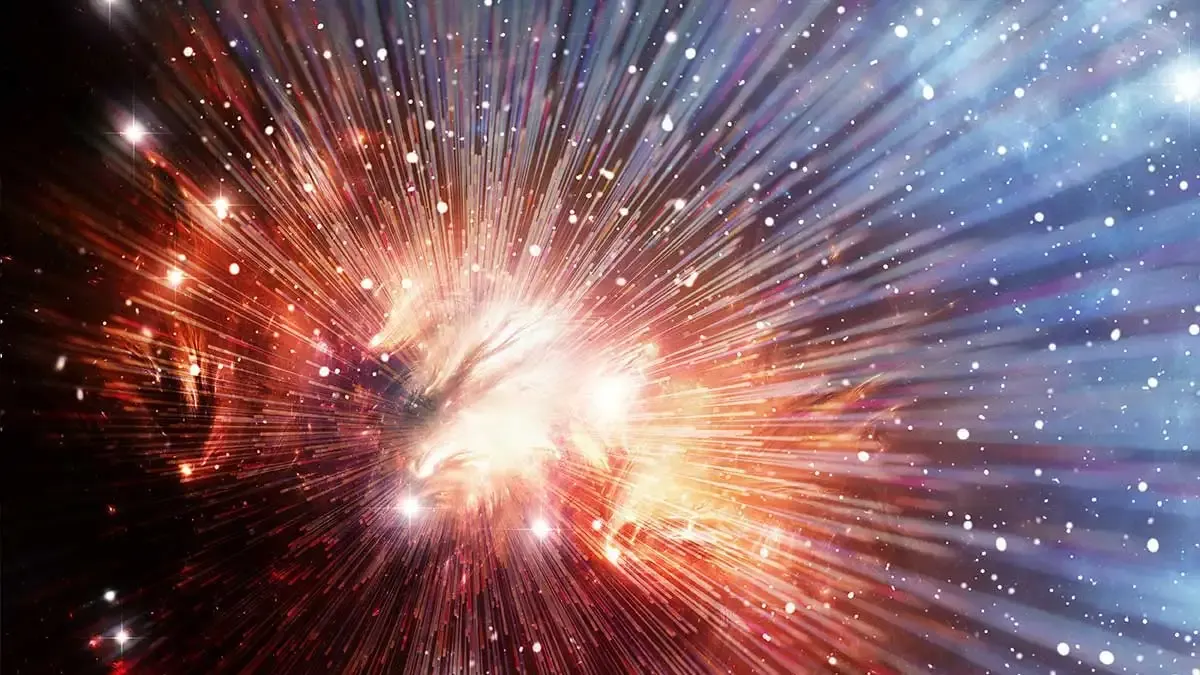
- The Unified Singularity: The text describes the heavens and Earth as originating from a single, unified mass before being forcibly separated:
“Do the disbelievers not realize that the heavens and earth were ˹once˺ one mass then We split them apart?…” (Qur’an 21:30)
This provides a remarkable conceptual parallel to the Big Bang Theory, which posits the universe began from a singularity that underwent rapid expansion (Rattq and Fatq in Arabic, meaning “sewn” and “unstitched”).
- Cosmic Expansion: The Qur’an also refers to the continuous, ongoing expansion of the cosmos:
“We built the universe with ˹great˺ might, and We are certainly expanding ˹it˺.” (Qur’an 51:47)
This concept of a dynamically expanding universe was only scientifically proven in the 20th century through astronomical observation by figures like Edwin Hubble.
2. Embryology: The Precision of Prenatal Stages
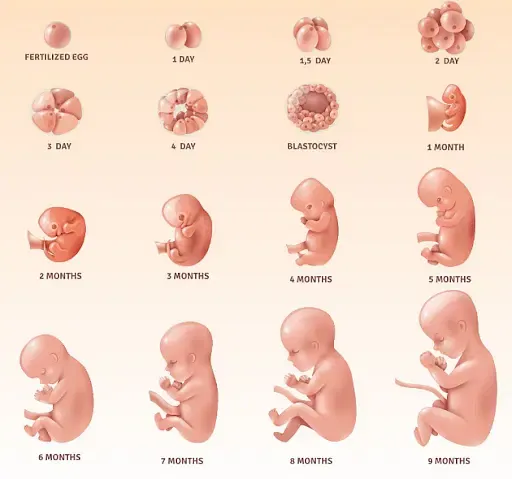
The Qur’an details the step-by-step, sequential evolution of the human embryo with astonishing accuracy:
“We created the human being from an extract of clay. Then We placed him as a drop [nuṭfah] in a secure place. Then We made the drop into a clinging clot [‘alaqah], and We made the clinging clot into a lump of flesh [muḍghah]…” (Qur’an 23:12–14)
The progression described—from nutfah (a drop of fluid), to ‘alaqah (something that clings, or leech-like), to muḍghah (a chewed-like substance)—perfectly mirrors the distinct morphological stages of human development observed today through modern microscopy. Leading embryologists, such as Professor Keith Moore, have famously noted the profound accuracy of these centuries-old descriptions.
3. Geology: The Stabilizing Role of Mountains
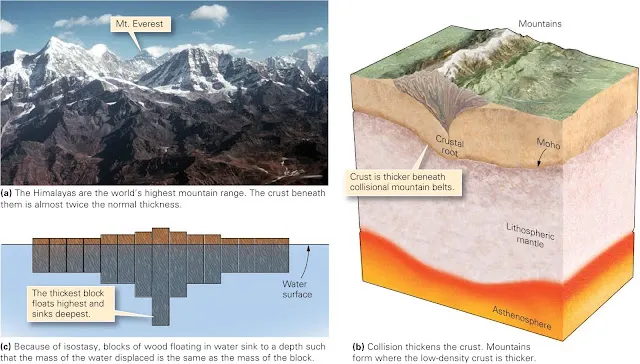
The Qur’an describes the deep-rooted function of mountains on Earth:
“He placed firm mountains on the earth so it will not shake beneath you…” (Qur’an 16:15)
The term used for mountains (Rawāsī) implies anchors or pegs. Modern plate tectonics and geology confirm that mountains are not merely surface features; they have massive, deep “roots” that extend into the mantle, serving to stabilize the Earth’s crust and dampen the movement of tectonic plates.
4. Historical Integrity: The Pharaoh’s Body

In a declaration unique among historical religious texts, the Qur’an mentions the fate of the Pharaoh who opposed Moses:
“Today We will preserve your corpse so that you may become an example1 for those who come after you. And surely most people are heedless of Our examples!” (Qur’an 10:92)
This verse aligns strikingly with the 19th-century discovery and subsequent preservation of the mummy of Pharaoh Ramesses II (widely believed to be the Pharaoh of the Exodus)—one of the most intact and studied historical remains, preserved literally as a sign for later generations.
📌 A Necessary Reminder: Guidance is Primary
It is critical to remember that the Qur’an is not dependent on science; science is catching up to the Qur’an. Scientific knowledge is dynamic—theories evolve, are updated, and sometimes overturned. The Qur’an, however, is constant and timeless.
Therefore, while scientific correlations can deepen our appreciation:
- We must not force interpretations onto verses to fit current, temporary scientific theories.
- We must avoid claiming every verse is a specific scientific proof.
- We must uphold that the Qur’an’s spiritual, moral, and legal purpose is primary.
As the great jurist Imam Al-Shāfiʿī said: “Knowledge is two types: knowledge of religion and knowledge of the world—and the Qur’an encompasses both.”
The Real Miracle is that the Qur’an speaks in a way that every generation can understand—from the simplest shepherd in the 7th century to the most advanced scholar today. As human knowledge grows, new layers of meaning continue to emerge, fulfilling the promise:
“We will show them Our signs in the horizons and within themselves until it becomes clear to them that this is the Truth.” (Qur’an 41:53)