
How the Final Revelation Is Organized
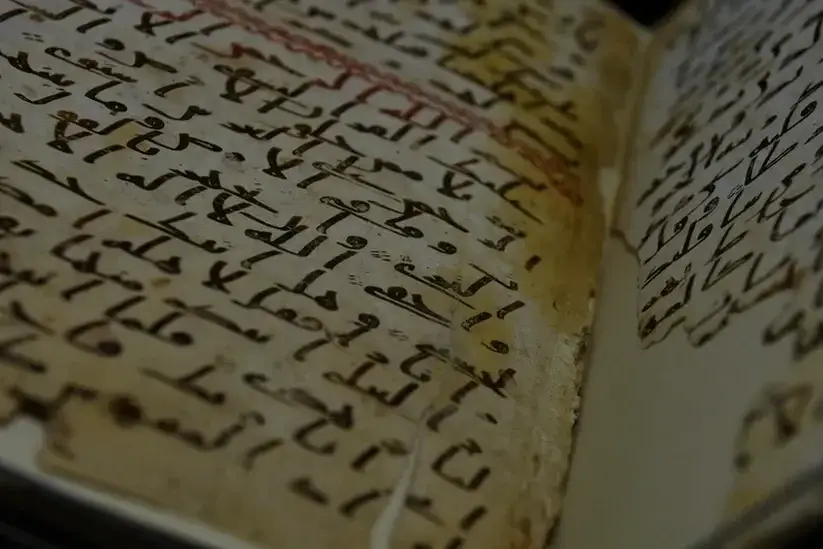
Muslims believe that the Qur’an is the word of Allah revealed to the Prophet Muhammad ﷺ through the Angel Gabriel. Beyond its spiritual message, the Qur’an’s structure is itself unique and divinely remarkable. It does not follow the format of conventional books, yet its design carries deep wisdom and guidance for the heart and mind.
Not in Chronological Order — By Divine Wisdom
One of the first things readers notice is that the Qur’an is not arranged by time of revelation. Verses revealed early in Makkah and later in Madinah are interwoven throughout. This structure reminds us that the Qur’an is not simply a historical narrative — it is guidance for every moment and every condition of the human soul.
The Qur’an is arranged according to Allah’s command, not the Prophet’s personal decision:
“He is the One who has sent down to you the Book.”
(Qur’an 3:7)
The order we have today is exactly as taught by the Prophet ﷺ, preserved without change.
114 Surahs of Varying Lengths
The Qur’an contains:
- 114 chapters (Surahs)
- Over 6,236 verses (Ayat) according to most counts
- More than 77,000 words
- Roughly 600 pages (standard print)
Surahs range dramatically in size:
| Surah | Length |
|---|---|
| Al-Baqarah | 286 verses |
| Al-Kawthar | 3 verses |
This variety keeps recitation rhythmic, diverse, and spiritually engaging.
Division by Themes and Purposes
The Qur’an is often divided into two major categories based on where the verses were revealed:
| Type of Revelation | Focus |
|---|---|
| Makkan Surahs | Belief, afterlife, moral reform, purpose of existence |
| Madinan Surahs | Law, community-building, social ethics, governance |
Together, they give a complete picture of individual transformation and societal transformation.
Unique Literary Design
The Qur’an does not follow human patterns of writing — no linear storyline, no traditional chapters. Its structure mirrors life itself: interconnected themes, spiritual reminders, and repeated lessons that touch the heart in cycles.
Examples of its literary features include:
- Ring (chiastic) symmetry — concepts mirror at the beginning and end of passages
- Parallelism — balanced structures for reflection
- Rhythmic flow — a recitation style unlike poetry or prose
Even scholars of Arabic who rejected Islam admitted the Qur’an’s linguistic structure was unmatched by human speech.
Organized for Recitation and Reflection
The Qur’an was designed to be:
- recited beautifully
- memorized by the heart
- reflected upon with the mind
It is divided into 30 equal sections (Juz’) so Muslims can recite it progressively, especially during Ramadan. It also contains 60 Hizb, 240 Rubʿ, and several thematic groupings for study.
The Qur’an is a book to live with daily, not simply read once.
A Book for All Times and All People
Because it is not bound to one era, culture, or narrative structure, the Qur’an remains timeless. It can speak to a child, a philosopher, a scientist, or a spiritual seeker — each finds layers of meaning appropriate to their journey.
“This is the Book in which there is no doubt, a guidance for the mindful.”
(Qur’an 2:2)
Conclusion: Divine Structure, Divine Purpose
The arrangement of the Qur’an reflects the perfect wisdom of the One who revealed it. It guides emotion and intellect, touches the heart gently yet powerfully, and reveals truth in recurring layers — just as life teaches us lessons over and over again.
The Qur’an is not just a book to understand.
It is a book to experience.