
A Story of Faith, Refuge, and Interfaith Respect
When Islam was still in its earliest years in Makkah, Muslims faced severe persecution. The powerful Quraysh tribe tortured, humiliated, and isolated anyone who believed in the One God. Many early Muslims lost their homes, livelihoods, and even their lives simply for saying:
“Our Lord is Allah.”
Amid this growing oppression, the Prophet Muhammad ﷺ made a remarkable decision — one that would shape Islamic history and interfaith relations forever.
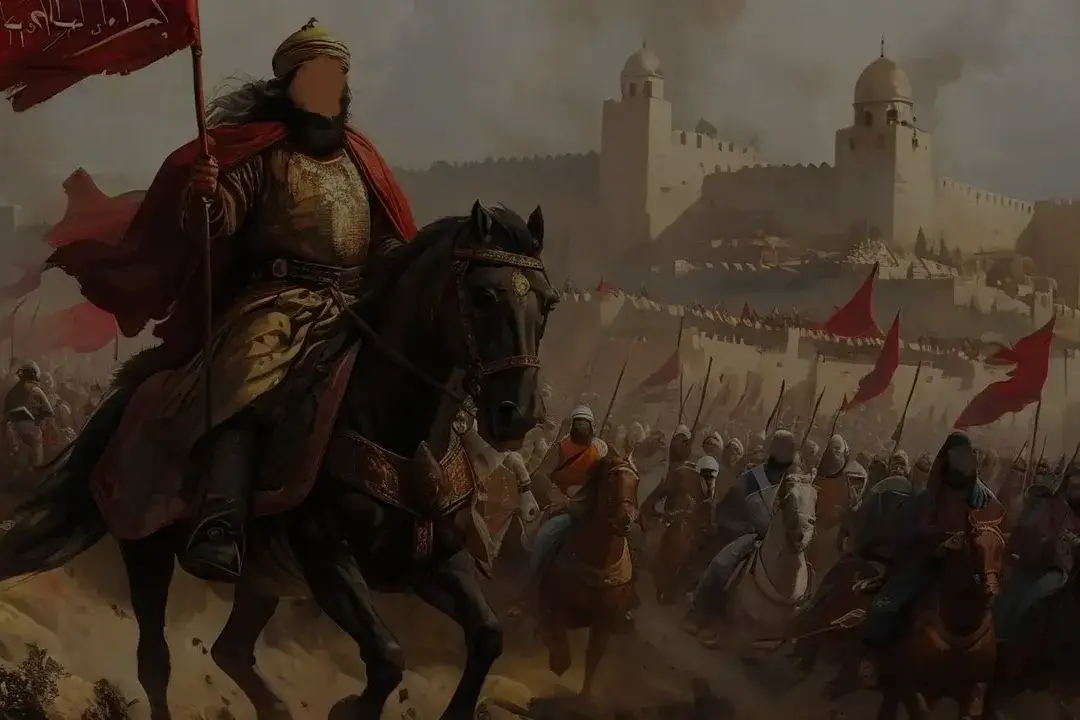
He instructed a group of his companions to migrate across the Red Sea to a foreign land called Abyssinia (present-day Ethiopia), ruled by a just Christian king known as Negus (Ashama ibn Abjar).
This became the first hijrah (migration) in Islam.
Why Abyssinia?

The Prophet ﷺ assured the Muslims:
“There is a king who does not wrong anyone.”
— Recorded in early Sīrah works
Abyssinia was chosen not because it was nearby or familiar, but because it was a land of justice. Islam teaches that justice is a universal value that must be honored wherever it exists — even if outside one’s own community.
This decision reflected the Prophet’s vision:
Islam is not for one tribe or region. It is a global message built on peace, dignity, and human rights.
The Encounter With the Christian King

Fifteen Muslims (men and women) first migrated. When Quraysh envoys arrived demanding they be returned, the refugees were brought before the king to explain their faith.
Their spokesman, Ja’far ibn Abi Talib, delivered a powerful message:
“We were a people in ignorance… until Allah sent us a Messenger…
He ordered us to speak the truth, honor family ties, be kind to neighbors,
and worship Allah alone.”
— Reported in Ibn Ishaq
Ja’far then recited verses from Surah Maryam about the miraculous birth of Jesus (peace be upon him).
The king was moved to tears.
“By God, this and what Jesus brought come from the same source.
Go, for by God, I will never surrender you to them.”
— Negus’ response, recorded in historical Islamic texts
This moment was a landmark of interfaith harmony — Christians protecting Muslims out of shared belief in the same God.
The First Sanctuary: Abyssinia and the Foundation of Inter-Faith Justice
The establishment of the first safe community of Muslims outside Arabia—in Abyssinia (modern-day Ethiopia and Eritrea)—was not merely a historical escape; it was a profound divine lesson in governance, justice, and inter-faith relations. Here, a small group of persecuted Muslims, including the daughter of the Prophet $\text{ﷺ}$, found refuge, practicing their faith freely, working, marrying, and living peacefully under the protection of a Christian monarch.
A Covenant of Honor
This pivotal event embeds several eternal principles into the Islamic tradition:
• Islam respects those who uphold justice: The Muslims sought refuge specifically because they trusted the renowned justice of the Christian ruler, An-Najashi (The Negus). • Muslims can live peacefully as minorities: The community demonstrated that fidelity to Islam does not preclude loyal, peaceful citizenship in a non-Muslim state that guarantees their rights. • Alliances based on ethics and honor are Islamic: The bond formed was not based on religious creed or tribal ties, but on the universal value of justice.
Abyssinia remains a powerful symbol of Islamic gratitude. The Prophet ﷺ later honored this bond by praying for its righteous king: “May Allah forgive the Negus.” — (Sahih Muslim)
🛑 Challenging Harmful Narratives
This sacred chapter of history stands as an irrefutable challenge to many modern, divisive narratives: • Islam is not against Christianity: The first external protector of Islam was a Christian king, and their alliance was rooted in shared ethical principles.
• Islam is not spread by force: The survival of the nascent Muslim community depended entirely on moral appeal and a Christian monarch’s just governance, not coercion or conquest. • Islam honors justice above all else: It shows that true honor is extended to any person who upholds truth and justice—regardless of their religion.
At the very beginning of Islam’s history, Muslims and Christians stood together in defense of human dignity. Their alliance was founded upon: • Shared faith in the One Creator: Both recognized the singular, ultimate source of morality. • Mutual Respect: The Muslims respected the Negus’s authority, and he respected their faith. • A Commitment to Justice: This was the sacred bond that transcended tribalism and power politics.
🌍 Why This Story Matters Today
As religious and cultural conflicts unfortunately erupt worldwide, the story of the migration to Abyssinia serves as a timeless and desperately needed reminder:
- Diversity does not prevent unity: Muslims, Christians, and others can live harmoniously under a just system.
- Faith is a bridge, not a barrier: The pursuit of God should lead to common ground and cooperation, not division.
- A just society welcomes all sincerely seeking God: True strength lies in protecting the rights of the vulnerable and ensuring equity for every citizen. A Christian king became a hero and recipient of the Prophet’s prayer—because truth recognizes truth, and justice is a universal language.
Conclusion
The community’s success was not achieved by conquering with power, but by connecting through righteousness and ethical conduct. The migration to Abyssinia was, and remains, a foundational testament: Cooperation between religions is not only possible—it is a cornerstone of the Islamic story. Justice is the universal value honored by God, and true faith uplifts all of humanity.