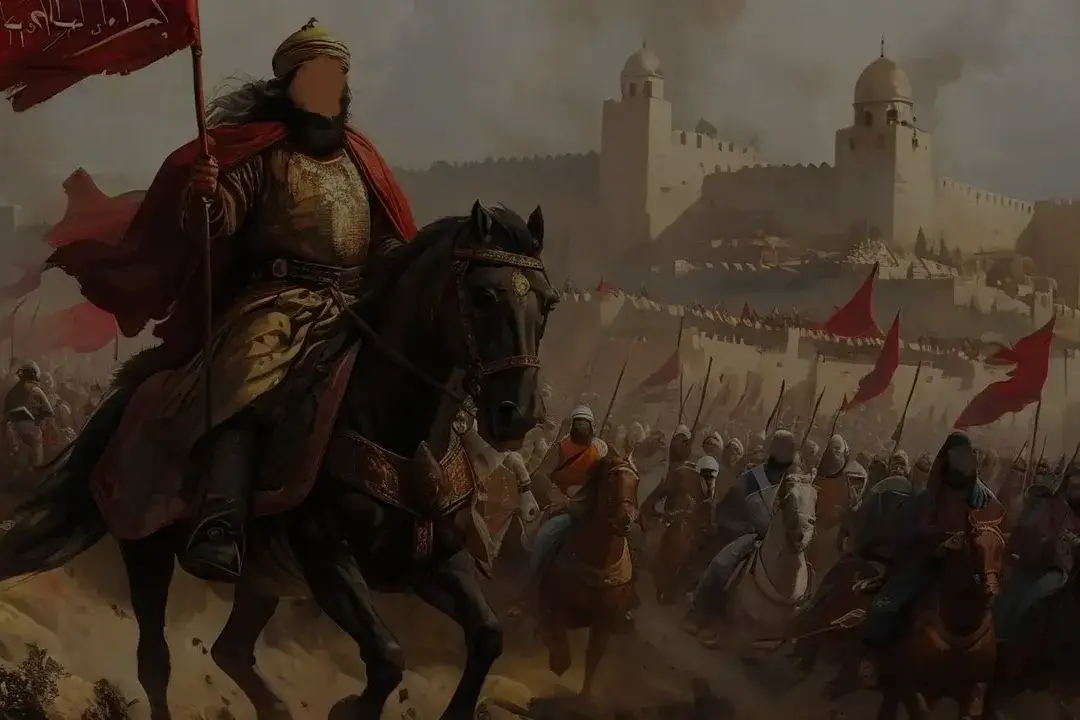

One of the most persistent and damaging misconceptions about Islam is the claim that it spread by force. However, history tells a fundamentally different, and far more inspiring, story. Islam spread fastest, and perhaps most deeply, in places where no Muslim army ever set foot—across vast stretches of Africa, throughout the islands of Southeast Asia, and along the bustling ports of the Indian Ocean. The vehicle of this immense global expansion was not the sword, but something far more powerful: commerce, mutual trust, and the exemplary conduct of Muslim traders.
⛵ Trade Routes Became Pathways of Faith
From the earliest Islamic era, Muslims strategically positioned themselves at the nexus of global commerce. They were the key operators of complex, high-stakes trade networks that linked the known world:
• The crucial Indian Ocean trade connecting East Africa, Arabia, India, and Southeast Asia. • The famed Silk Road stretching eastward toward China and Central Asia. • The thriving merchant ports in Yemen, Oman, and the Persian Gulf.
In these demanding environments, Muslim merchants earned reputations that stood head and shoulders above their competitors. They were known for: Truthfulness in Speech and Fairness in Transactions, Generosity in Partnership, and Loyalty in Contracts.
This integrity was not a cultural coincidence; it was a direct mandate from the Divine Law. The Islamic faith views honesty in business as an act of worship. The Qur’an commands:“Give full measure and weight in justice.” (Qur’an 6:152)
When non-Muslims did business with Muslims, they were not just encountering goods; they were encountering Islam in practice.
Case Study: Indonesia — The Triumph of Integrity
Indonesia is the undeniable proof of Islam’s peaceful spread. Today, it is home to the largest Muslim population in the world (over 230 million people)—yet Islam never arrived there through military conquest.
Muslim traders from Arabia, India, and East Africa introduced the faith. Local leaders, initially skeptical, observed their neighbors and partners. They saw the traders’ unwavering character, their strict ethics, and the justice of their community dealings.
The transition was organic, gradual, and profound, beginning as early as the 7th century. Trade served as the initial bridge, spreading Islam from ports to capital cities, and eventually, across entire archipelago nations. The faith was embraced willingly because it was recognized as a superior framework for a just and ethical society.
Africa: Islam Through Community and Learning
The patterns of peaceful acceptance were repeated across the African continent: • East Africa: Muslim traders built thriving, cosmopolitan trade towns along the Swahili coast (e.g., Mombasa and Kilwa). Islam blended naturally into society through marriage, family connections, education, and moral leadership.
• West Africa: Great kingdoms like Mali and Songhai willingly adopted Islam, not out of fear, but as a source of sophisticated law, advanced scholarship, and stable diplomacy. Timbuktu became a renowned intellectual center.
In both instances, the spread was driven by admiration for the moral and intellectual framework of the new faith, not military power.
Business as a Reflection of Faith (Da’wah)
The Prophet Muhammadﷺ himself was a merchant, and he taught that trustworthiness in business is a sign of true belief:“The truthful and honest merchant will be with the prophets, the righteous, and the martyrs.” (Sunan al-Tirmidhi 1209) Muslim traders carried this profound teaching across continents. Their lives were not just commerce; they became da’wah—a living invitation to Islam. People embraced the faith because they saw: • Justice in partnership and contract. • Mercy toward the poor and indebted. • Respect for women and workers. • Equality transcending ethnicity and class. These were revolutionary values that consistently won hearts and minds where armies could not.
Conclusion: The Moral Expansion
This historical truth challenges the false narratives that still dominate discourse today. Islam is not defined by conquest; it is defined by relationships and righteous conduct. The expansion of Islam across the world was not a political or military movement—it was a moral one. From bustling global ports to the most remote islands, people accepted Islam freely because they saw truth, justice, and compassion reflected in the hearts and dealings of those who carried it. A kind merchant with unimpeachable character ultimately did more for the spread of Islam than any army ever could. This enduring legacy reminds us: when Muslims embody the highest standards of justice, honesty, and compassion, Islam spreads—not by force, but by love and example.