
From the whispers of ancient Egypt to the vibrant recitations of today, there’s a profound, often overlooked thread connecting the divine revelations of various faiths: the power of song and rhythmic speech.
It seems God’s messages weren’t just meant to be read; they were meant to be sung, chanted, and recited in a manner that transcends mere words, embedding themselves deep within the human soul. This phenomenon is particularly striking when we look at traditions with strong monotheistic or proto-monotheistic elements.
1. The Psalms: Israel’s Hymns to the One God (Judaism/Christianity)
The Book of Psalms stands as a testament to this truth. The very word “Psalm” comes from the Greek psalmos, originally referring to a song accompanied by a stringed instrument. These 150 lyrical poems, prayers, and hymns form the spiritual backbone of Jewish and Christian worship.
- Divine Connection: They capture the full spectrum of human emotion—joy, lament, praise, repentance—all directed towards the One God of Abraham, Isaac, and Jacob. Their poetic structure and inherent rhythm made them central to ancient temple worship and continue to be sung and chanted today, deeply embedding the Divine relationship into the collective consciousness.
2. The Gāthās: Zarathushtra’s Songs to Ahura Mazda (Zoroastrianism)
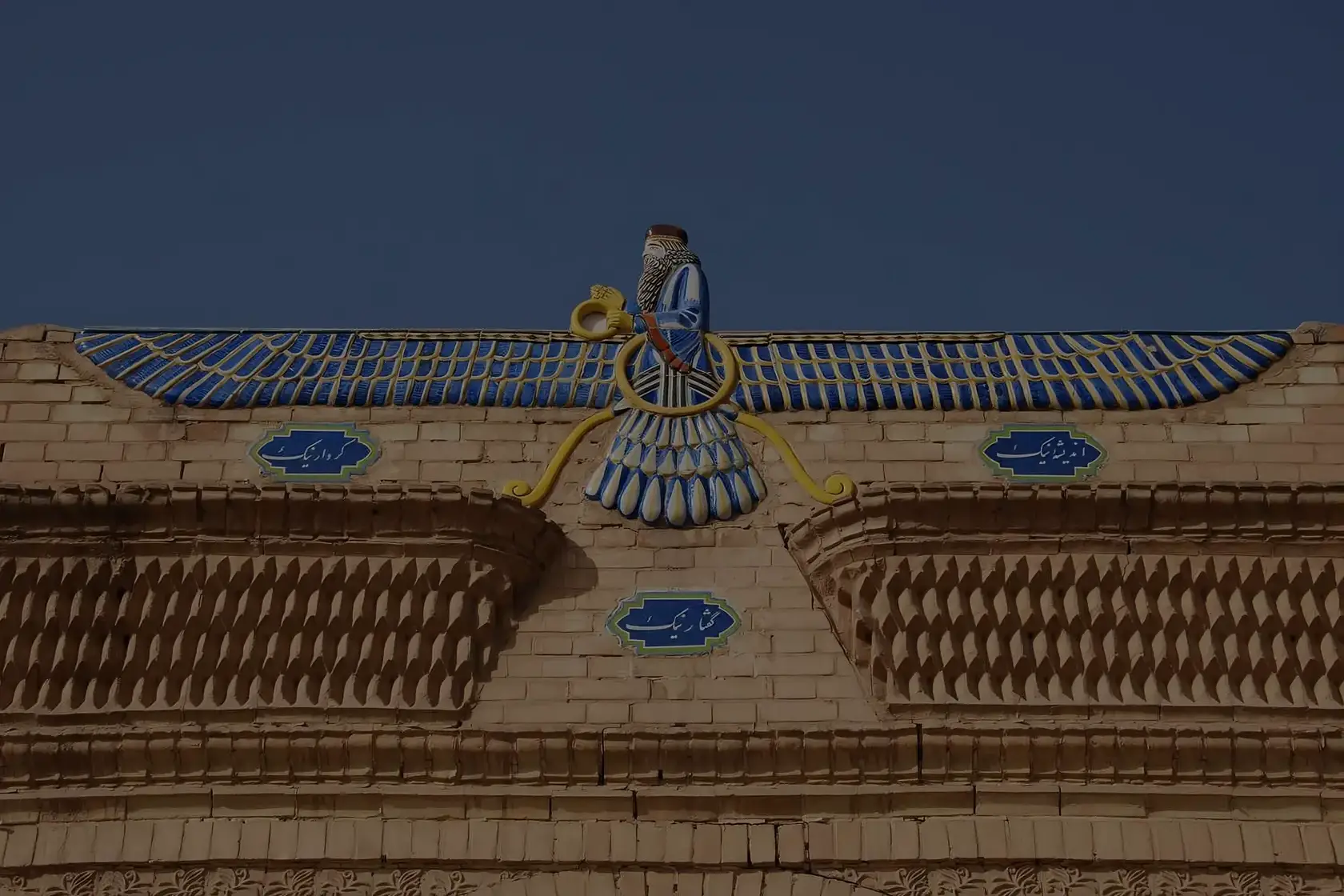
Journeying back to ancient Persia, we find the Gāthās, the most sacred texts of Zoroastrianism, believed to be the direct compositions of the Prophet Zarathushtra (Zoroaster) himself.
- Divine Connection: The word Gāthā literally means “song” or “hymn.” These are not prose; they are metrical, poetic verses intended for melodic delivery. Zarathushtra used these hymns to deliver his revolutionary message of ethical monotheism, proclaiming Ahura Mazda (the Wise Lord) as the sole uncreated God, the source of all good, and the object of all worship. The rhythmic nature of these ancient songs helped solidify a new, unified understanding of the Divine in a polytheistic world.
3. The Great Hymn to the Aten: Akhenaten’s Praise to the Sole Creator (Ancient Egypt)
Perhaps one of the earliest examples of a foundational monotheistic-style religious poem comes from ancient Egypt, preceding many established faiths. The Great Hymn to the Aten, attributed to Pharaoh Akhenaten (c. 1353–1336 BCE), is a powerful and lengthy composition.
- Divine Connection: During his reign, Akhenaten attempted to revolutionize Egyptian religion by focusing worship on Aten, the sun-disk, as the sole, uncreated, and universally benevolent god. This hymn is a vibrant, lyrical ode of praise to Aten as the ultimate creator and sustainer of all life on Earth. Its poetic structure, grand scope, and singular focus make it a compelling proto-monotheistic “song” from antiquity.
4. The Qur’an: The Melodic Recitation of God’s Word (Islam)
While the Qur’an is not explicitly titled a “song” or “hymn,” its very nature is inextricably linked to melodic recitation (Tilāwah or Tajwīd). The rhythmic patterns, phonetic beauty, and inherent musicality of the Arabic text are foundational to its reception and spiritual impact.
- Divine Connection: For Muslims, the Qur’an is the literal Word of God, revealed to the Prophet Muhammad (peace be upon him). Its melodic delivery is not merely an aesthetic choice; it enhances memorization, preserves the text with unparalleled accuracy, and profoundly elevates the act of worship. The recitation transforms the listener’s experience, allowing the divine message of Tawhid—the absolute Oneness of Allah—to resonate deeply in the heart and soul.
The Enduring Wisdom of Divine Melody
What can we gather from this universal phenomenon?
It suggests that God, in His infinite wisdom, chose to deliver His most sacred messages in a form that transcends mere intellectual understanding. Rhythm and melody serve as powerful conduits:
- For Preservation: Making long, complex divine texts easier to memorize and transmit accurately across generations, especially before the age of printing.
- For Spiritual Impact: Engaging not just the mind, but the heart and soul, allowing the truth to penetrate deeper and evoke a profound sense of awe, peace, and devotion (Tarab in Arabic or Bhakti in Sanskrit).
- For Distinction: Elevating the sacred word above everyday speech, signaling its divine origin and commanding a unique reverence.
The divine symphony, in its many forms, is a testament to a consistent, loving intention: to reach humanity through every possible channel, making the message of Oneness both accessible and deeply affecting.