
The Islamic declaration of Tawhid—the absolute, singular, and indivisible Oneness of Allah—is often seen as a unique, sectarian belief. But what if it is, in fact, the original, primordial truth (Fitrah) whispered to every civilization?
The Qur’an asserts that God sent messengers to every nation with the same essential message. By peeling back layers of cultural adaptation and historical deviation, we find compelling evidence in the foundational scriptures of the world’s major faiths that affirms a singular, supreme, and ultimate Creator. This convergence of truth suggests a profound unity of Divine source that transcends all labels.
Let’s trace the echo of the One God through history.
1. The Abrahamic Traditions: Uncompromising Unity
The faiths stemming from the lineage of Prophet Abraham (peace be upon him)—Judaism and Christianity—are founded on the explicit rejection of polytheism.
A. Judaism: The Absolute Oneness of Echad
The Shema Yisrael is the cornerstone of Jewish daily prayer and theology.
Deuteronomy 6:4: “Hear, O Israel: The Lord is our God, the Lord is One.” (Hebrew: YHWH Eloheinu, YHWH Echad.)
The word אֶחָֽד (Echad) is not simply a numerical “one”; in this context, it signifies a unique, composite, and absolute unity. It is the declaration that the Godhead rules out duality, plurality, or division. This uncompromising monotheism established the covenant and broke radically from surrounding pagan cults. It forms the historical and theological foundation that Islam inherits and confirms.
B. Christianity: Jesus Affirms the Source
Prophet Jesus, known as ‘Isa (peace be upon him) in Islam, consistently taught within the monotheistic framework of the Torah.
Mark 12:29: “The most important one is this: ‘Hear, O Israel: The Lord our God, the Lord is one.'” (Greek: Kurios ho Theos hēmōn Kurios heis estin.)
By citing the Shema directly and using the Greek word εἷς (Heis) to denote singularity, Jesus affirmed the absolute Oneness of God as the supreme commandment. Furthermore, the Old Testament unequivocally states, “For I am God, and there is no other; I am God, and there is none like me.” (Isaiah 46:9). This confirms that the core mission of Jesus was rooted in the same strict monotheism of all previous messengers.
2. Ancient Indian Traditions: Unity Behind the Veil
The vast spiritual landscape of Hinduism often appears polytheistic. Yet, a deep dive into its most ancient and philosophical texts reveals a profound concept of a single, ultimate Reality.
The Vedas: Ekam Sat (The One Truth)
The philosophical Upanishads speak of Brahman—the supreme, unchanging Reality that is without beginning, without end, and is the ultimate source and sustainer of the universe.
Rig Veda 1.164.46: “Truth is One, though the sages speak of it in many ways.” (Sanskrit: Ekaṁ sad viprā bahudhā vadanti)
The phrase एकं (Ekam) signifies “One” or “Single,” and सत् (Sat) refers to the Ultimate Reality or Truth. This perspective suggests that the myriad deities (devas) are merely different names, facets, or lenses through which limited human understanding perceives the singular, infinite Brahman—a concept that resonates powerfully with the Qur’anic teaching that Allah has many Beautiful Names, yet His essence remains Al-Ahad (The One).
3. Persian and East Asian Wisdom: The Uncreated Source
Even in traditions with distinct cultural expressions and cosmologies, the belief in an ultimate, singular source is evident.
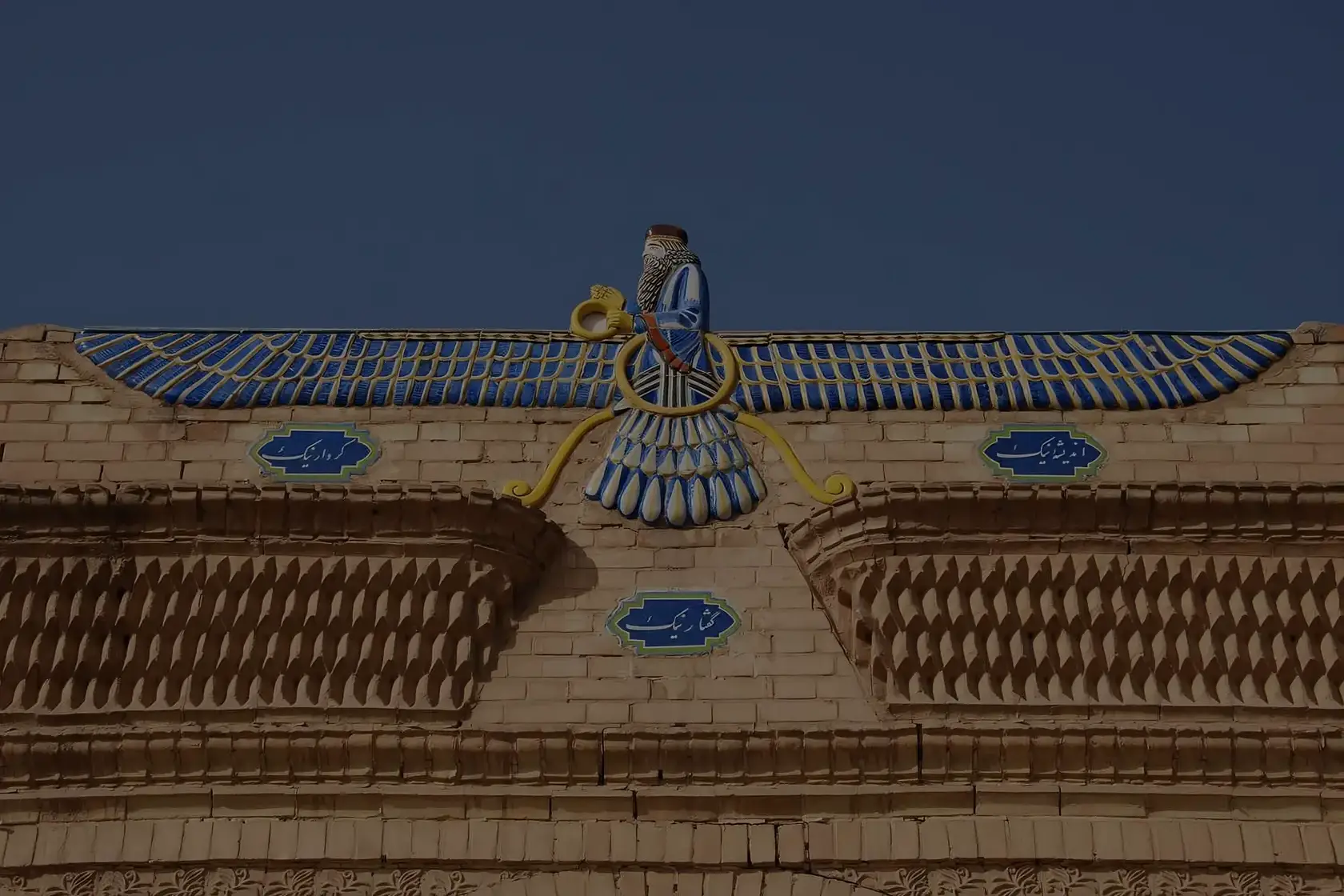
A. Zoroastrianism: Ahura Mazda (The Wise Lord)
The ancient Persian faith, Zoroastrianism, is fundamentally monotheistic in its theology. Its foundational scripture, the Gathas, focuses solely on one Creator.
Yasna 44.7 (Excerpt): [The Wise Lord] is asked who is the creator of the path of the sun and stars, and who sustains the earth and sky, concluding that all power belongs to the One Wise Lord (Ahura Mazda).
Zoroaster’s central mission was a protest against the pagan polytheism of his time, demanding worship be directed only to Ahura Mazda, the uncreated source of all goodness and light. This doctrine of a singular Creator who alone deserves worship is a pristine example of Tawhid predating Islam.
B. Philosophical Taoism: The Ineffable Tao (The Way)
The Tao Te Ching describes a metaphysical reality that is the ultimate source and order of the universe.
Tao Te Ching, Chapter 1 (Excerpt): “The Way [Tao] that can be told is not the eternal Way; The name that can be named is not the eternal Name.”
The Tao is described as a nameless, formless, uncreated principle from which all of creation emanates. This emphasizes a transcendent source that is beyond human conceptualization and naming, echoing the Qur’anic concept of Allah being “unlike anything in the creation” (Qur’an 42:11) and being the absolute Originator (Al-Khaliq).
⚖️ Conclusion: The True Heritage of Humanity
The meticulous citation of these verses reveals that Tawhid is not a new invention; it is the spiritual heritage of all humanity. Every true prophet, speaking in a different language and cultural context, affirmed the reality of a single, Supreme Being.
The multiplicity of religions is thus often explained as a consequence of:
- Cultural Adaptation: The initial message was tailored to specific peoples (e.g., dietary laws for the Israelites).
- Human Deviation: Over time, these pure teachings were corrupted, misinterpreted, or mixed with pagan practices, leading to distinct sectarian differences.
The Qur’an was revealed as the final, perfectly preserved testament, sent to rectify those deviations and clarify the single, timeless message for all mankind.
By recognizing the echoes of the Tawhid in all major scriptures, we move past conflict and toward a universal respect based on the shared truth of the One Creator.