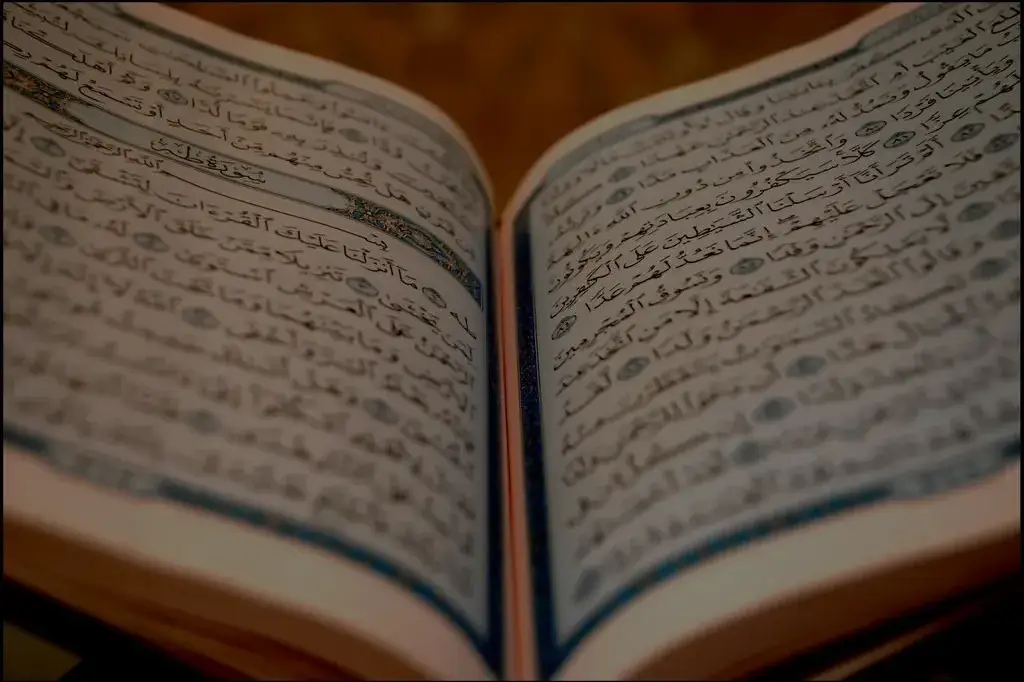

The Qur’an is the word of Allah, revealed to the Prophet Muhammad ﷺ in Arabic. For many new readers, a common question arises: Why Arabic? Why wasn’t the final revelation sent in every language, or why doesn’t it change with translations? The answer is rooted in history, preservation, spiritual power, and the very essence of divine communication.
1. 🗣️ Arabic: A Language of Precision and Richness
Arabic is renowned for its depth and sophisticated linguistic structure. It allows a single root word to unveil multiple layers of meaning, ensuring God’s message is conveyed with maximum accuracy and nuance, making it spiritually powerful. For instance, the Arabic word rahmah (mercy) expresses deep love, comprehensive care, and active protection all at once—a concept incredibly difficult to fully capture in a single word of translation. Arabic preserves these exact, layered meanings in a way few other languages can. As the Qur’an itself states:
“We have sent it down as an Arabic Qur’an so that you may understand.” (Qur’an 12:2)
2. 🎶 A Language Built for Revelation and Recitation
Arabic’s unique grammar, inherent eloquence, and distinct rhythm allow the Qur’an to be recited beautifully, making it easily memorized and deeply impactful. The sound patterns and rhetorical structure of Qur’anic Arabic trigger deep reflection and powerful emotion in the heart of the listener. It’s a testament to this inherent power that even non-native speakers often find themselves moved to tears simply by hearing the Qur’an recited, regardless of whether they understand the verbal translation. Its language is not merely a method of communication; it is a profound, sensory, and spiritual experience.
3. ✅ Preservation Without Alteration
The choice of a single, universal original language is a matter of divine protection. If the Qur’an were allowed to change languages, meanings would inevitably shift, distort, and become obscured over time. By maintaining one universal original Arabic text, the message remains eternally unchanged, and its wording stays unified across the entire globe. Every physical copy, in every country, remains identical to the original revelation. Translations are invaluable for understanding the meaning, but they are recognized by all Muslims as being interpretations—they are not the Qur’an itself. Only the Arabic text is considered the literal, perfect word of God.
“Falsehood cannot approach it from before it or from behind it [it is] a revelation from a [Lord] Wise and Praiseworthy.” (Qur’an 41:42)
4. 🌐 Arabic Unified a Global Ummah
Islam spread across continents—from Asia and Africa to Europe and the Americas—yet the Qur’an is consistently recited in the same original Arabic words. This created an unparalleled unity of worship. Whether a Muslim resides in Japan, Nigeria, Mexico, or Turkey, they recite the same Surah Al-Fatihah in their prayers, the same Qur’an during Ramadan, and the same Arabic verses for daily remembrance. This shared linguistic ritual creates a powerful, common identity (Ummah) across diverse cultures, an achievement unmatched by any other faith tradition.
5. 🧑🤝🧑 Not Ethnic or Cultural — Guidance is Universal
The designation of Arabic as the language of revelation does not imply that Islam is exclusive to Arabs or is merely a cultural phenomenon. On the contrary, Islam strongly emphasizes that guidance is for all humanity, and that Arabs are not superior to non-Arabs. Every person is encouraged to learn, study, and recite the Qur’an, regardless of their ethnic or geographic origin. The message itself is universal and for the entire world, even though its linguistic root was established in Arabia.
Where Do Translations Fit?
Translations are absolutely essential for accessibility and learning the meaning, and scholars universally encourage reading them. However, Muslims recognize a clear and critical distinction: The Arabic Qur’an is the exact, perfect, literal word of Allah, miraculous in its linguistic structure and the only text permissible for use in formal prayer. The translation, by contrast, is a human effort, serving as an explanation of the meaning. This distinction ensures the original revelation is protected while making its knowledge accessible to everyone.
The Qur’an remains in Arabic because it is linguistically precise, spiritually powerful, preserved exactly as revealed, and unifying for the world. The Qur’an speaks to every heart, but its Arabic form is the preserved, singular heartbeat of the divine message.
“Indeed, We sent down the Reminder, and surely We are its Guardian.” (Qur’an 15:9)