
When the world celebrates the Scientific Revolution, the story often begins with Europe in the 16th century—Galileo, Newton, and Copernicus. But that turning point was not an independent invention. Long before Europe emerged from its Dark Ages, Islamic civilization laid the essential intellectual, philosophical, and empirical foundation that made the modern world possible.
From the 8th to the 14th century, the era historians call the Golden Age of Islam, Muslim scholars ignited a global transformation in science, technology, and philosophy—one driven not by secular curiosity, but directly by Islamic principles.
1. Faith: The Sacred Mandate for Knowledge
The engine of this transformation was the Qur’an itself. Its pages repeatedly call believers to observe the world, reflect on nature, and seek understanding:
“Do they not look at the camels — how they are created? And at the sky — how it is raised?” — Qur’an 88:17–18
This divine command elevated curiosity to an act of worship. The Prophet Muhammad (peace and blessings be upon him) reinforced this by making it a universal obligation:
“Seeking knowledge is an obligation upon every Muslim.” — Ibn Majah
This simple command created a civilization obsessed with learning, leading to:
- Widespread literacy.
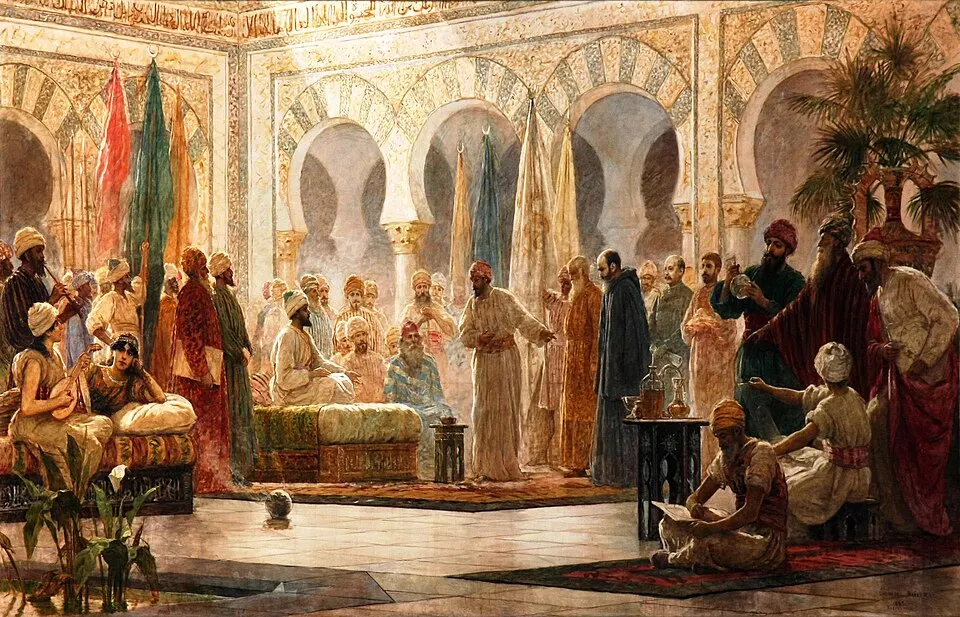
- Massive, public-access libraries (like the Bayt al-Hikmah or “House of Wisdom” in Baghdad).
- Universities (Madrasahs) that welcomed scholars of all faiths and backgrounds.
Education was not limited to the elite—it was a religious responsibility, making knowledge a public good.
2. Global Synthesis: The Birth of Collaborative Science
As Islam expanded, it acted as the ultimate intellectual nexus, gathering and refining the world’s ancient wisdom:
- Greek philosophy and mathematics.
- Persian and Roman medicine.
- Indian mathematics (including the decimal system and zero).
- Chinese engineering and paper-making technology.
These disciplines met under one intellectual roof, where Muslim scholars didn’t just translate the works; they transformed, developed, and applied them.
This synthesis led to fundamental breakthroughs that define modern life:
| Discipline | Key Muslim Innovation & Contribution |
|---|---|
| Mathematics | Algebra (al-jabr), Algorithms (from Al-Khwarizmi), and the formal introduction of the Decimal System. |
| Medicine | Public hospitals, complex surgical instruments (developed by Al-Zahrawi), and the first medical encyclopedias used in Europe for centuries. |
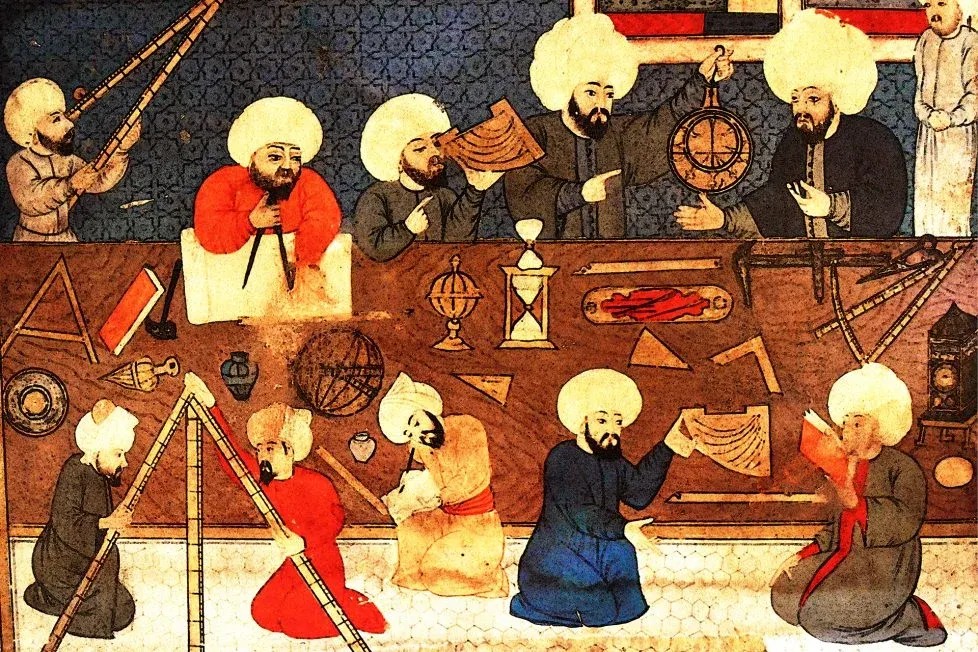
| Astronomy | Precision observatories, sophisticated star catalogues, and planetary models that later influenced Copernicus. |
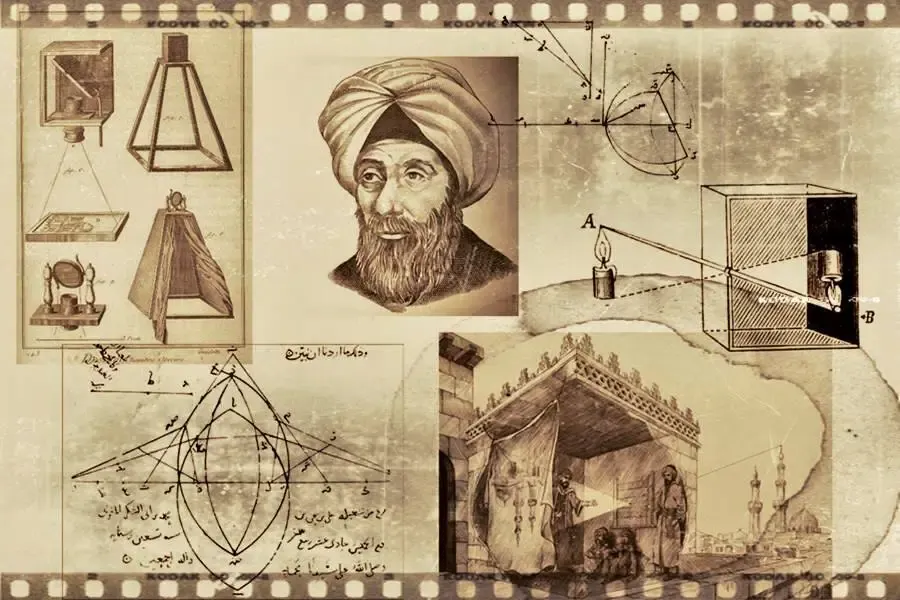
| Optics | The principles of the Camera Obscura and the correct scientific understanding of vision (that light enters the eye, rather than leaving it). |
| Chemistry | Laboratory science, distillation, crystallization, and the classification of chemical substances. |
3. The Scientific Method: The Legacy of Ibn Al-Haytham
Perhaps the most significant contribution was the creation of the empirical, methodological approach that underpins all modern research.
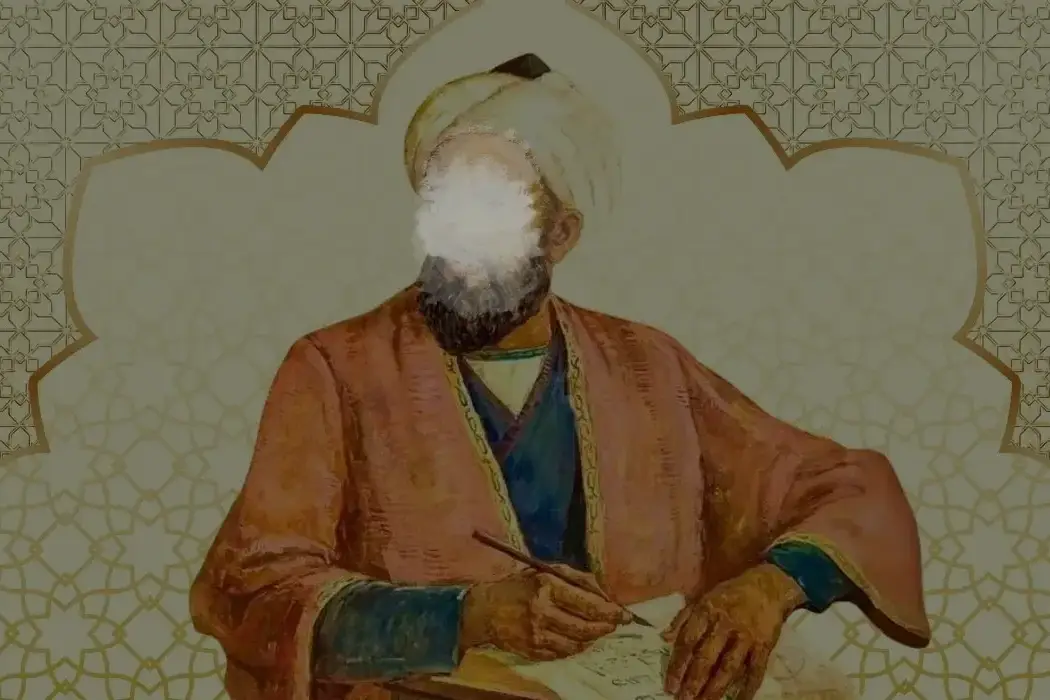
Ibn Al-Haytham (known as Alhazen in Europe, 965–1040 CE), the “Father of Optics,” introduced a revolutionary scientific process:
Hypothesis → Experimentation → Mathematical Analysis → Conclusion
This is the modern scientific method. He forcefully advocated for the critical, non-dogmatic pursuit of truth:
“The seeker of truth is not one who studies the writings of the ancients and follows them blindly, but one who questions and tests.” — Ibn Al-Haytham
Without this principle—the absolute rejection of blind faith in previous authorities—universities and laboratories today would not exist.
4. The European Debt: Teachers, Not Inventors
History reveals that the European Renaissance and the subsequent Scientific Revolution were directly financed by the knowledge assets of the Islamic Golden Age.
- Copernicus drew heavily on the detailed planetary models and trigonometry developed by Muslim astronomers like Ibn al-Shatir.
- Roger Bacon studied the works of Ibn Al-Haytham on optics.
- Thousands of Arabic manuscripts on philosophy, medicine, and mathematics flowed into Europe through Islamic Spain (Al-Andalus) and Sicily, providing the intellectual energy needed to escape medieval stagnation.
Islamic civilization did not just hold the torch; it sparked the European awakening.
The Call to Revive the Spirit
The Golden Age was not merely a time period; it was a mindset—one defined by the perfect fusion of Reason and Revelation.
The monumental achievements of that era are encoded in our daily life: Algorithm, Algebra, Chemistry, Zenith, Azimuth—all come directly from Arabic. Every time a computer runs, every time a doctor operates, the echoes of this civilization are present.
The future of Islamic civilization can indeed be bright again. The path forward lies in reigniting that spirit, grounded in the divine command that remains:
“Say: My Lord, increase me in knowledge.” (Qur’an 20:114)
Our task is to commit ourselves once more to holding the Qur’an in one hand as our eternal source of truth, and the tools of discovery in the other as our means to realize that truth in the world.