
In every chapter of the Qur’an (except one), Muslims begin with the same phrase:
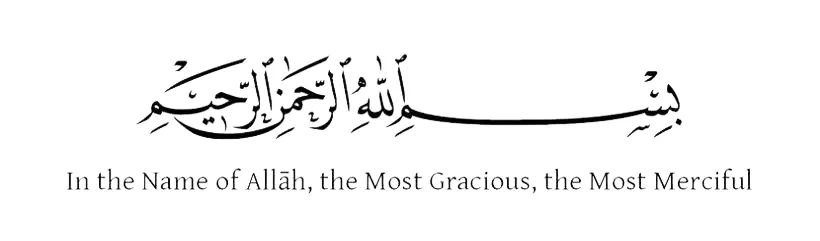
«“In the Name of Allah, the Most Gracious, the Most Merciful.” (Bismillāh ir-Raḥmān ir-Raḥīm)»
These two Names — Ar-Raḥmān and Ar-Raḥīm — both come from the root raḥmah, meaning mercy, compassion, and loving care. Before God introduces Himself as the Creator, the King, or the Judge — He introduces Himself as the Most Merciful. That alone tells us what His relationship with creation is truly built upon: Love and Mercy.
Mercy as the Essence of Creation
Allah says in the Qur’an:
«“My Mercy encompasses all things.” (Qur’an 7:156)»
According to Islamic theology, everything in existence — from the rhythm of the planets to the beating of a heart — exists by His Mercy. The Prophet Muhammad ﷺ said:
«“When Allah created the creation, He wrote in His Book which is with Him on His Throne: ‘My Mercy overcomes My wrath.’” (Sahih al-Bukhari 3194, Sahih Muslim 2751)»
This is not abstract poetry — it is the spiritual heartbeat of the universe. It means that even when we face hardship, there is always a deeper mercy operating beneath the surface — a wisdom that may take time, patience, or faith to see.
The Universal Love of God
In Islam, God’s mercy is not reserved for one tribe, religion, or group. It is universal — extended to all beings, human and non-human alike.
«“The Most Merciful has mercy on those who show mercy. Be merciful to those on the earth, and the One above the heavens will have mercy on you.” (Sunan al-Tirmidhi 1924)»
Every form of love we experience — a mother’s tenderness, a friend’s loyalty, a teacher’s patience — are all reflections of God’s infinite love. The Prophet ﷺ once saw a woman frantically searching for her lost baby. When she finally found him, she hugged him tightly. He asked his companions:
«“Do you think this woman would throw her child into a fire?” They replied, “No, by Allah, not if she could help it.” The Prophet ﷺ said, “Allah is more merciful to His servants than this mother is to her child.” (Sahih al-Bukhari 5999, Sahih Muslim 2754)»
This hadith gives a glimpse of Divine love — not cold or distant, but tender, intimate, and protective.
Love as the Root of Worship
When Islam speaks of worship (‘ibadah’), it isn’t about servitude in the harsh sense — it’s about returning love with love. True faith grows when one recognizes how deeply loved they already are by their Creator.
The Qur’an describes those who are close to God as:
«“He loves them and they love Him.” (Qur’an 5:54)»
Love in Islam is not sentimental; it manifests as gratitude, humility, and service. To love God means to act beautifully (ihsān), to seek justice, and to embody compassion in all dealings. Every good deed is, in truth, a response to Divine affection.
The Two Dimensions of Mercy
The scholars explain that Ar-Raḥmān refers to God’s mercy that encompasses all creation — the air we breathe, the rain that falls, the kindness shared between strangers. Ar-Raḥīm, on the other hand, refers to the special, enduring mercy reserved for the believers — the spiritual guidance, forgiveness, and nearness in the afterlife.
The Prophet ﷺ said:
«“Allah has divided mercy into one hundred parts. He kept ninety-nine with Himself and sent down one part to the earth. From that one part, creatures show mercy to one another…” (Sahih Muslim 2752)»
That single portion is what allows every act of kindness in existence. Imagine then — what must the full mercy of Allah be like?
Living as Reflections of Divine Mercy
To know God is to reflect His attributes in our own behavior. If He is Ar-Raḥmān, we should strive to be merciful. If He is Al-Wadūd (The Loving), we should be loving. Faith, then, is not only about belief — it’s about becoming what we worship.
«“Show mercy to those on earth, and the One above the heavens will show mercy to you.” (Sunan al-Tirmidhi 1924)»
Even for non-Muslims, this truth is accessible: mercy and love are the highest forms of human intelligence. They dissolve hatred, heal societies, and open the soul to what is sacred.
The Invitation of Divine Love
In the end, the Qur’an does not present God as distant or vengeful, but as a Loving Friend who constantly calls us back:
«“Say, [O Prophet], ‘O My servants who have wronged their souls, do not despair of the mercy of Allah. Indeed, Allah forgives all sins. Truly, He is the Most Forgiving, the Most Merciful.’” (Qur’an 39:53)»
This verse is the Divine equivalent of an embrace — a promise that no matter how far one has gone, love is always the first and final reality.
🌿 Closing Reflection
Every religion has its own understanding of the Divine, but Islam’s view is simple and profound: Before God is the Judge, He is the Lover and the Merciful. And before we are servants, we are recipients of that love.
To live in remembrance of this — to be kind, forgiving, and gentle — is to live as mirrors of the One who said:
«“My Mercy has overcome My Wrath.”»
Author’s note: This reflection aims to show that Divine love in Islam isn’t abstract — it’s the living foundation of reality itself. Whether one calls Him Allah, God, or simply the Source, His mercy is the force that sustains every breath we take.