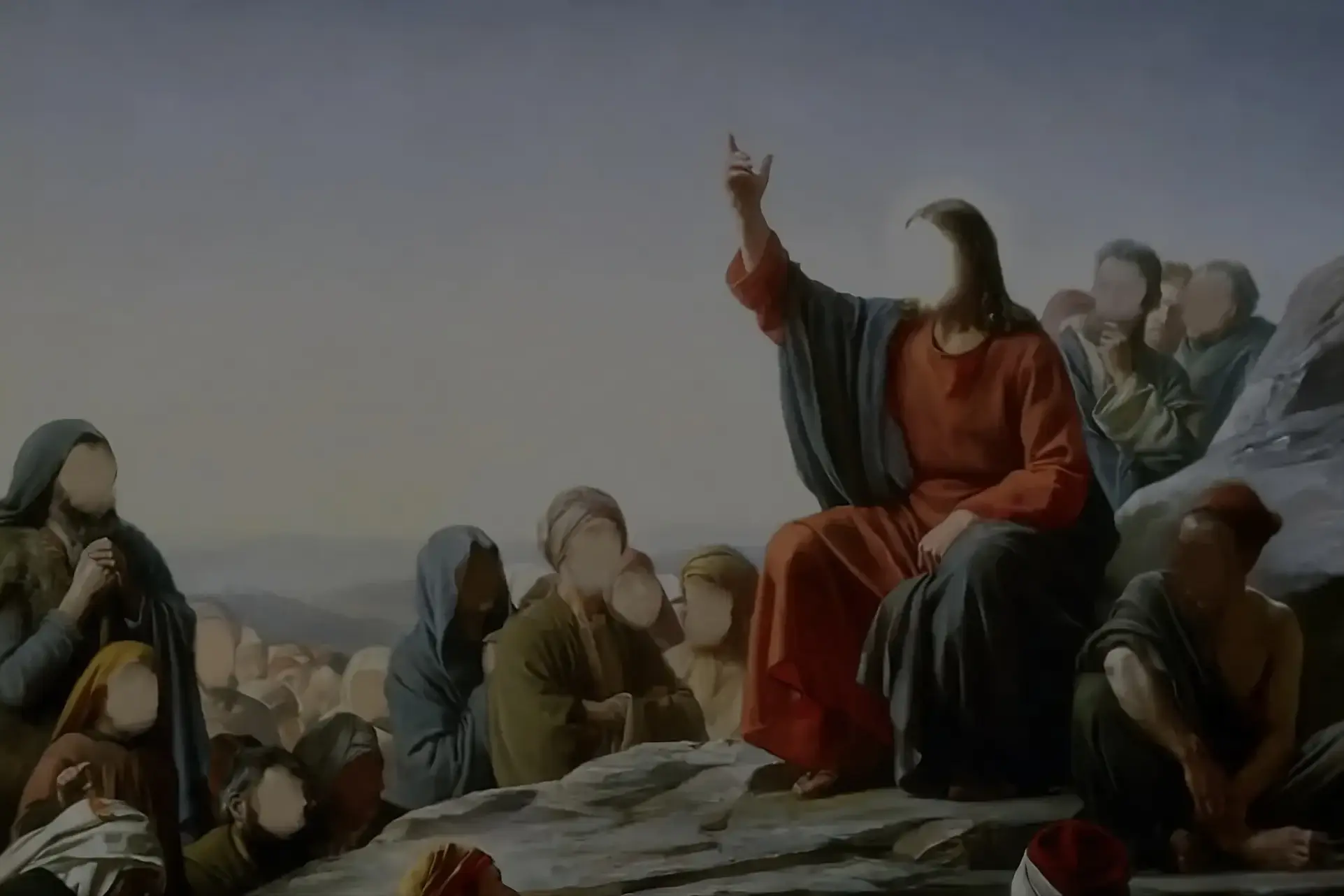

Moses
The Prophet of Law, Liberation, and the Divine Secrets
Introduction: The Most Mentioned Prophet
Prophet Moses (peace be upon him) is a towering figure in Islam, revered as one of the five greatest Messengers (Ulul ‘Azm). His life, marked by miraculous birth, confrontation with the world’s greatest tyrant, leadership through exodus, and the reception of the Divine Law (Torah), is the most frequently recounted prophetic story in the Qur’an, mentioned over 136 times.
Moses’ narrative is not just a history of the Israelites; it is a timeless lesson in the struggle between pure monotheism (Tawhid) and arrogant tyranny, a story that resonates deeply with the human experience of oppression and redemption.
1. The Confrontation: Parallels with Pharaoh (Firaun)
The Qur’an and the Bible share the dramatic arc of Moses’ life, specifically his conflict with the Pharaoh (Firaun). The similarities underscore the continuous chain of revelation, while the subtle differences in emphasis provide unique Islamic theological insights.
Shared Narrative Highlights:
- The Basket in the Nile: Both accounts detail the miraculous survival of Moses as an infant, placed in a basket on the Nile River to escape Pharaoh’s decree to kill all male Hebrew babies, only to be found and raised within Pharaoh’s own household.
- The Divine Call: Moses’ initial encounter with God at the burning bush in the desert, where he was commissioned as a Prophet and given the miracle of the staff turning into a snake.
- The Plagues: The successive divine punishments (plagues) afflicted upon Egypt as signs of God’s power and warnings to Pharaoh.
- The Exodus and The Sea: The final flight of the Israelites from Egypt, culminating in the miraculous parting of the sea, allowing Moses and his people to cross while drowning Pharaoh and his army.
The Qur’anic Emphasis on Arrogance:
The Qur’an details Pharaoh’s tyranny not just as oppression, but as a claim to divinity. Pharaoh’s ultimate sin was his arrogance in claiming to be the supreme lord of Egypt: “O my people, is not the kingdom of Egypt mine and these rivers flowing beneath me?” (Qur’an 43:51). The story teaches that all worldly authority is false when it rejects the authority of God.
2. A Unique Miracle: The Preservation of Pharaoh’s Body
A remarkable statement in the Qur’an addresses the fate of Pharaoh after he drowned:
“So today We will save your body that you may be to those who succeed you a sign. And indeed, many of the people are of Our signs oblivious.” (Qur’an 10:92).
This verse is traditionally understood as a unique Divine act. The preservation of Pharaoh’s physical body, pulled from the sea and left intact, specifically to serve as a manifest sign (ayah) for future generations. This fact underscores a key purpose of the Qur’anic narrative: providing historical proofs to strengthen the faith of the believers.
3. The Untold Story: The Encounter with Khidr
One of the most unique and profound narratives concerning Moses in the Qur’an is his quest for knowledge, detailed in Surah Al-Kahf (Chapter 18).
Moses asks God to guide him to a servant possessing knowledge he does not have. This servant is traditionally known as Al-Khidr (The Green One, often associated with spiritual wisdom).
- The Condition: Khidr agrees to allow Moses to travel with him only if Moses promises not to question any of his actions.
- The Three Trials: Khidr commits three seemingly unjustifiable acts: sinking a boat, killing a boy, and fixing a crumbling wall without asking for payment. Moses breaks his promise and questions each act.
- The Divine Wisdom: Khidr then reveals the divine wisdom behind each action, explaining that the boat was sunk to save it from a tyrannical king; the boy was killed because he was destined to bring ruin upon his righteous parents; and the wall was fixed to protect a treasure belonging to two orphans.
This encounter teaches a foundational theological lesson: Divine knowledge and wisdom operate on a plane beyond human capacity. It serves to humble even the greatest Prophets, reminding them that God’s plan often requires seemingly contradictory or unfair actions for an ultimate, greater good.
4. The Prophetic Link to Muhammad (peace be upon him)
Moses’ life serves as a direct link to the final Prophet, Muhammad (peace be upon him), fulfilling a promise found even in the previous scriptures.
- The Prophecy in Deuteronomy: In the Bible, Prophet Moses is recorded as delivering a prophecy that resonates with the Islamic understanding of Muhammad’s role: “The LORD your God will raise up for you a prophet like me from among you, from your fellow Israelites. You must listen to him.” (Deuteronomy 18:18).
- The Fulfillment in Islam: Islamic scholarship views Prophet Muhammad (peace be upon him) as the one who fulfills this prophecy. He was “like Moses” in several ways: he came with a complete Divine Law (Sharia), he led his community in both political and spiritual life, and he was married and had a family (unlike Jesus). He was also raised from among the descendants of Abraham, fulfilling the core Abrahamic covenant.
The life of Prophet Moses (peace be upon him) is thus not a closed chapter, but an enduring lesson on striving for justice, submitting to God’s will, and recognizing the continuation of the divine message through the final Prophet.