
A Forgotten Golden Age of Coexistence
When people talk about medieval Europe, they often imagine an era of darkness, war, and religious intolerance. Yet during that same period, a remarkable civilization thrived in the Iberian Peninsula — Al-Andalus — where Muslims, Christians, and Jews lived, learned, and built together for centuries.
From the 8th to the 15th century, Islamic Spain became one of the most advanced societies on Earth — a beacon of knowledge, culture, art, and spiritual refinement.
Its legacy continues to shape the modern world, even if history rarely gives it credit.
A Meeting Place of Civilizations
Unlike the Crusades, which sparked conflict between faiths, Al-Andalus demonstrated the possibility of harmony. It was not a utopia — but it was a society that actively protected diversity.
Under Muslim governance:
- Christians and Jews (Ahl al-Kitab) were granted religious freedom
• Their churches and synagogues remained active
• They governed personal affairs by their own laws
• Scholars of all backgrounds worked together
This arrangement reflected a Qur’anic principle:
“There is no compulsion in religion.”
(Qur’an 2:256)
It created a vibrant social fabric where difference enriched society instead of dividing it.
A Center of Knowledge and Innovation
At a time when much of Europe struggled with intellectual stagnation, Al-Andalus lit the torch of progress.
Cities like Córdoba, Seville, and Granada became global centers of learning.
- Universities that welcomed all faiths
• Public libraries preserving Greek, Roman, and Persian wisdom
• Medical schools and hospitals pioneering new discoveries
Córdoba alone held over 400,000 books — more than most of Europe combined.
Muslim, Christian, and Jewish scholars worked side by side:
- Jewish philosopher Maimonides
• Muslim surgeon Al-Zahrawi
• Christian scholar Gerbert of Aurillac (later Pope Sylvester II)
This intellectual cross-pollination helped spark what later became the European Renaissance.
Beauty Rooted in Faith
Islamic Spain left behind masterpieces that still inspire awe:
- The Alhambra Palace in Granada — poetry carved into stone
• The Great Mosque of Córdoba — a symphony of arches and light
• Stunning gardens, waterways, and architectural harmony
This beauty was not simply artistic — it reflected the Islamic vision of creating paradise on earth through balance and geometry.
Faith expressed itself in architecture
as a celebration of God’s order.
Why Did Al-Andalus Decline?
The dream slowly fractured due to:
- Political division among Muslim kingdoms
• Rising intolerance and power struggles in Christian Europe
• External pressure from the Reconquista
• Internal disputes and loss of unity
By 1492, the last Muslim kingdom of Granada fell — and a dark reversal followed.
Christians and Jews who once lived freely under Muslim rule were forced to convert or flee. The Spanish Inquisition erased centuries of coexistence, replacing knowledge with fear.
A thriving multicultural civilization faded into memory.
A Legacy That Still Speaks
Though the political state fell, its ideas, sciences, and spirit live on:
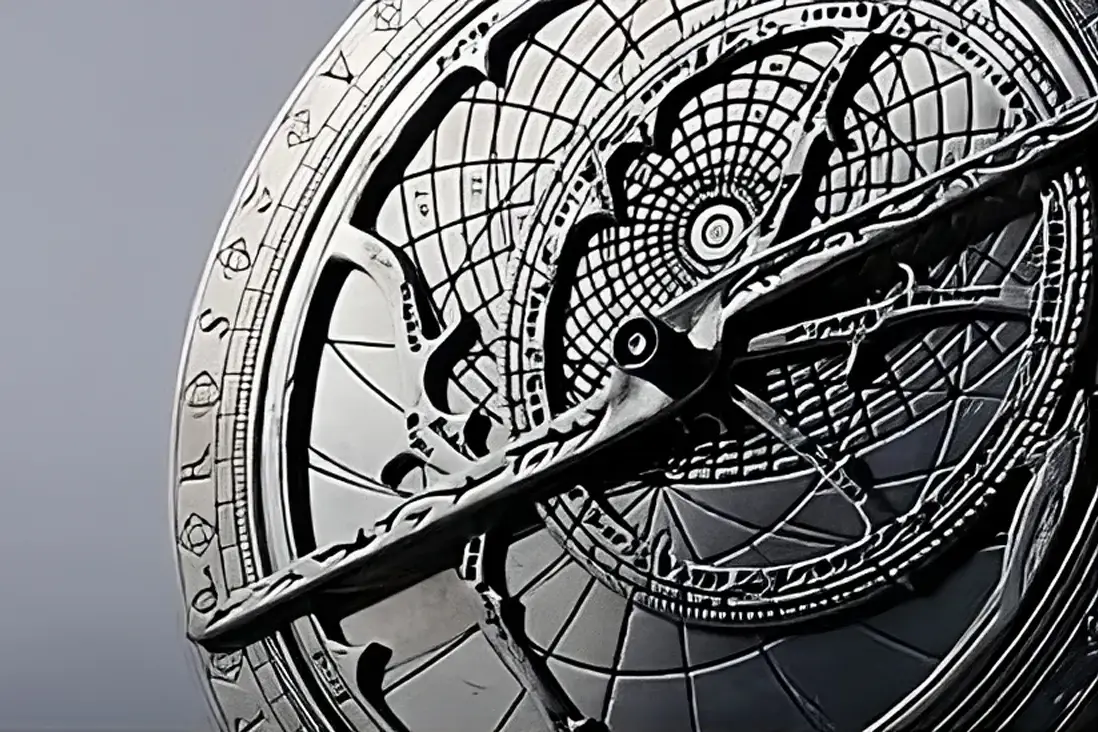
- Algebra, astronomy, and medical science advanced through Al-Andalus
• European universities grew from Andalusian scholarly traditions
• Its architecture remains an unmatched cultural treasure
• Its example challenges modern assumptions about religion and progress
Al-Andalus is proof that:
When faith and knowledge unite
humanity reaches its highest potential.
A Lesson for Our Time
In a world increasingly defined by division and fear, the story of Al-Andalus offers a powerful reminder:
Muslims, Christians, and Jews can live together
with mutual respect, shared purpose, and collective flourishing.
Its history calls us to rebuild what once existed:
A civilization where faith inspires peace
not conflict.
Where diversity strengthens society
not tears it apart.
Conclusion
Al-Andalus was more than a place.
It was an idea — a vision of coexistence rooted in spiritual dignity.
While its physical empire no longer stands, the soul of Al-Andalus endures:
In libraries
In architecture
In languages
In our shared heritage
And most importantly —
in the belief that our differences are meant to make us stronger.