

Misunderstandings about Prophet Muhammad ﷺ are widespread, especially in societies where Islam is not well known or is often portrayed through biased media, limited education, or inherited cultural assumptions. As a result, many people form opinions based on misinformation rather than authentic historical sources.
This section aims to address some of the most common misconceptions held by non Muslims, particularly in Western and Christian majority societies, with clarity, fairness, and historical accuracy.
Each point is presented in a way that acknowledges the claim without validating it, followed by a calm and factual explanation rooted in Islamic teachings and reliable historical context. The goal is not to attack or criticize anyone for having these questions, but to provide balanced information that encourages understanding, respect, and honest exploration.
It is natural for people to question what they do not yet know or have only heard through second hand narratives. Islam welcomes sincere questions and invites meaningful dialogue. For this reason, the clarifications that follow are designed to offer perspective, correct misunderstandings, and present the teachings of Islam as they are, not as they are falsely portrayed.
1. “Muhammad ﷺ spread Islam by the sword.”
Clarification:
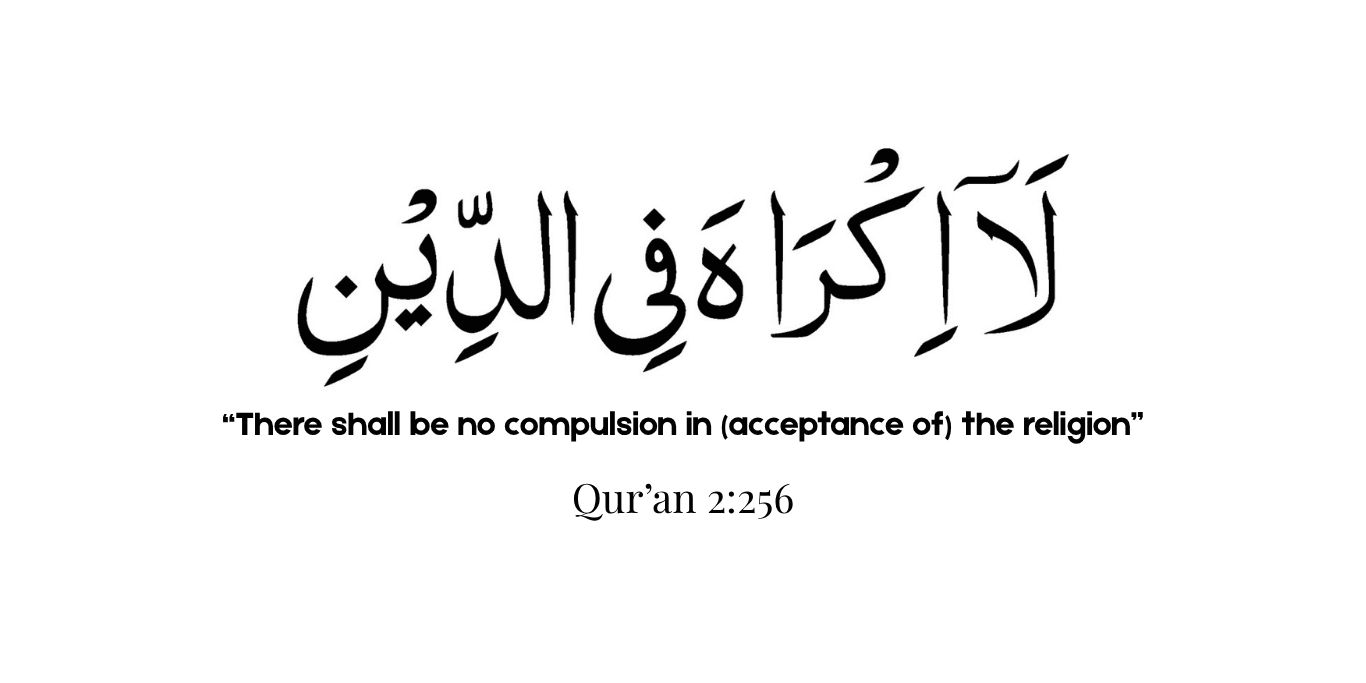
This is one of the most repeated misconceptions, often rooted in historical inaccuracies or selective representation. Islam teaches that true faith must come from conviction, not force. The Qur’an is clear on this principle:
“There is no compulsion in religion.” (Qur’an 2:256)
Throughout the Prophet Muhammad’s ﷺ life, the message of Islam was shared through preaching, character, and patient endurance in the face of oppression. For the first 13 years in Makkah, Muslims were a persecuted minority. They were insulted, tortured, socially boycotted, and even killed. Despite this, the Prophet ﷺ never allowed his followers to retaliate with violence. Instead, he instructed them to remain patient and non violent.
When hostility became unbearable, the Muslims migrated to Madinah to seek safety. Even then, the early Muslim community was forced into battles, not to conquer, but to defend their right to exist and practice their faith. Almost every battle in the Prophet’s ﷺ lifetime was defensive, responding to attacks or imminent threats from opponents who wanted to eliminate the Muslim community entirely.
If Islam were spread by force, non Muslims living under Muslim rule would not have been allowed to keep their religions. Yet, history shows the opposite. Jews and Christians lived in Muslim governed lands for centuries, maintaining their faith, places of worship, and legal systems. Many preferred Muslim rule over previous oppressive empires due to the fair treatment they received.
It is also worth noting that some of the largest Muslim populations today did not accept Islam through war at all:
- Indonesia and much of Southeast Asia embraced Islam through trade, good character, and peaceful missionary work.
- West Africa saw the spread of Islam through commerce and scholarly exchange.
- Many people around the world adopted Islam because they found its message rational, spiritual, and just.
Islam actually expanded most rapidly after the Prophet Muhammad ﷺ passed away, and still continues to grow today, not through force, but through its teachings and the free choice of individuals.
In summary, the claim that Islam was spread by the sword ignores historical context, misrepresents Islamic teachings, and disregards the many regions that accepted Islam peacefully. True Islamic teaching emphasizes that faith must come from the heart, not coercion.
2. “Muhammad ﷺ married Aisha at an inappropriate age.”

Clarification:
This subject is often discussed without understanding the historical and cultural context of the 7th century. To approach it fairly, several important points must be considered:
Historical norms were different:
Marriage customs in ancient societies were not the same as modern standards. Across Arabia, Asia, Africa, and Europe, it was common for marriages to occur soon after puberty. This was seen as normal and appropriate at that time. What seems unusual today was not viewed negatively or unusually in the culture of that era. Judging people of the past based on modern norms creates historical bias.
Aisha (ra) expressed love, respect, and confidence in the marriage:
Aisha (may Allah be pleased with her) never described her marriage to the Prophet ﷺ as harmful or traumatic. Quite the opposite, she spoke of him with admiration, affection, and pride. She consistently defended his character and the wisdom behind his decisions. There are no Islamic records or historical reports indicating she felt exploited or mistreated. Her own testimony carries weight, as she was an intelligent and articulate woman known for speaking the truth.
She became one of the most influential women in Islamic history:
Far from being silenced or sidelined, Aisha (ra) emerged as one of the greatest scholars of Islam. She narrated over 2,000 authentic hadiths, taught men and women, advised leaders, and became a reference point for Islamic law, medicine, ethics, and theology. Companions and scholars traveled to learn from her. Such a position of scholarship and leadership would not have been possible if she had suffered harm or lacked agency.
Consent and family involvement were present:
In that era, marriages were arranged through families with consent and consideration of the girl’s readiness and well being. Aisha’s marriage was supported by her parents, who loved and protected her. This confirms that the marriage was appropriate and honorable in their cultural and moral framework.
This was not driven by desire but by wisdom and divine purpose:
The Prophet Muhammad ﷺ’s marriages served social, educational, and communal purposes. His marriage to Aisha (ra) strengthened bonds with the closest companion Abu Bakr (ra) and ensured the preservation of intimate aspects of the Prophet’s teachings. Aisha’s sharp intellect allowed her to absorb, record, and teach essential elements of faith, family life, and Islamic law that no one else had access to.
Applying modern standards to ancient history is unfair:
Every culture evolves over time, and childhood, puberty, and age of responsibility were defined differently throughout history. What is considered appropriate today is shaped by modern laws, life expectancy, education systems, and societal expectations that did not exist in the 7th century. Historians agree that societies must be understood in their own context to ensure fairness and accuracy.
In summary:
A balanced view recognizes that the marriage was normal for its time, loved and honored by Aisha herself, and carried profound benefits for the Muslim community. Rather than sensationalizing the topic, it should be approached with historical awareness, respect for Aisha’s status, and acknowledgment of her remarkable contributions to Islam.
3. “Muhammad ﷺ invented Islam for personal gain.”

Clarification:
This claim does not align with the historical record, the Prophet’s personal lifestyle, or the sacrifices he endured. If someone were inventing a religion for wealth, fame, or power, their life would reflect personal benefit. The life of Prophet Muhammad ﷺ reflects the opposite.
He rejected wealth, power, and leadership when it was offered to him:
When the Quraysh leaders felt threatened by his message of monotheism, they attempted to stop him through bribes. They offered him kingship, unlimited wealth, and marriage to the most prestigious women if he would abandon his message. He refused all of it and replied:
“If they placed the sun in my right hand and the moon in my left hand to abandon this mission, I would never abandon it until Allah makes it prevail or I perish.”
This shows his devotion to truth, not personal comfort.
His lifestyle remained simple despite his authority:
Even after Islam spread and he became the leader of Madinah, he did not adopt a life of luxury. Instead:
- He slept on a simple mat that left marks on his back.
- Days passed when no cooked food was available in his home, and he often lived on dates and water.
- He owned minimal possessions and gave away whatever wealth he received to the poor.
A person seeking material gain would not choose poverty when wealth was within reach.
He endured hardship, persecution, and suffering for the message:
His early followers were tortured, killed, and exiled. He himself was insulted, mocked, stoned, and boycotted. He lost his wife Khadijah (ra) and uncle Abu Talib in what is known as the “Year of Sorrow.” He was forced to migrate from his own home in Makkah to Madinah for safety. These struggles contradict the idea of someone pursuing personal worldly benefit.
His teachings worked against personal ego:
Islam places clear emphasis on sincerity, humility, and accountability. The Prophet ﷺ taught that:
- Leadership is a responsibility, not a privilege.
- Pride, arrogance, and oppression are sins.
- Wealth must be purified through charity.
- Leaders should serve the people.
These principles restrict worldly desires rather than support them. A fabricated religion for self-gain would not restrict the founder but empower him above others. Islam elevated justice, equality, and compassion, even for enemies.
His impact was transformational, not self-serving:
The Prophet ﷺ uplifted:
- the poor and enslaved,
- women who were previously denied rights,
- orphans and widows,
- the oppressed and marginalized.
He established principles of justice, mercy, and social reform that benefited society as a whole, not himself personally.
People closest to him attested to his sincerity:
His family, friends, neighbors, and even former enemies acknowledged his honesty and integrity. Before his prophethood, he was known among the people as Al-Amin, meaning “The Trustworthy.” Even those who opposed his message trusted him with their valuables and disputes.
In summary:
Prophet Muhammad ﷺ gained no worldly luxury from Islam. He sacrificed comfort, safety, and wealth for a mission he consistently described as a divine responsibility, not a personal project. His life, choices, and character strongly contradict the claim that Islam was a product of personal ambition. Rather, they reflect sincerity, devotion to God, and service to humanity.
4. “Muhammad ﷺ oppressed women or promoted inequality.”

Clarification:
This misconception often comes from misunderstanding cultural practices, selective quoting, or judging 7th-century Arabia by modern standards rather than examining what Islam actually introduced. Historically, Prophet Muhammad ﷺ was a reformer who elevated the status, rights, and dignity of women at a time when women in many parts of the world had few or no rights.
Islam introduced women’s rights centuries before much of the world:
Before Islam, women in Arabia were often treated as property, denied inheritance, forced into marriage, and sometimes even buried alive as infants. Through revelation, the Prophet ﷺ transformed this society by granting women rights that were revolutionary at the time, including:
- The right to inherit and own property independently
- The right to education and religious scholarship
- The right to accept or refuse marriage proposals
- The right to initiate divorce and retain dignity in the process
- The right to business, earnings, and financial independence
These rights emerged over 1,400 years ago — long before women in Europe or America obtained similar rights.
Women played central roles in Islamic scholarship and society:
The Prophet ﷺ encouraged the education of women and included them in religious, social, and intellectual life. As a result:
- Some of the earliest and most respected scholars, jurists, and narrators of Hadith were women
- Women such as Aisha (ra), Hafsa (ra), and Umm Salamah (ra) became teachers of the Ummah
- Aisha (ra) alone narrated over 2,000 Hadith and was a key reference for male scholars
This demonstrates that Islam, from its foundation, facilitated women’s academic leadership and influence.
The Prophet ﷺ emphasized compassion, justice, and good treatment toward women:
He repeatedly condemned mistreatment of women and instructed kindness, respect, and fairness. Among his well-known teachings:
- “The best of you are those who are best to their wives.”
- He warned men that mistreating women is a sin and a betrayal of faith
- He consistently modeled gentleness, emotional intelligence, and respect in his own marriages
His Farewell Sermon also included clear instructions protecting women’s rights and dignity, showing the importance he placed on this matter.
Islamic teachings must be distinguished from cultural practices:
Some cultures today restrict women in ways that contradict Islamic teachings. These are cultural problems, not Islamic ones. For example, practices that deny girls education, force marriage, or silence women have no basis in the Prophet’s teachings and often reflect local traditions that Islam actually opposed.
Islam brought balance, not superiority of one gender:
Islam teaches that men and women are equal in spiritual worth, moral responsibility, and accountability before God. Their roles may differ in some areas due to biological and social wisdom, but difference of roles does not mean inequality or inferiority. Islam’s approach was to restore balance, justice, and mutual respect in family and society.
In summary:
Far from oppressing women, Prophet Muhammad ﷺ uplifted their status, rights, and honor at a time when such reforms were unheard of. His teachings laid the foundation for women’s dignity, protection, education, and empowerment. When understood correctly, Islam emerges as a faith that championed women’s rights long before the world recognized their importance.
5. “Muhammad ﷺ was violent or promoted terrorism.”

Clarification:
This claim mostly comes from misinformation, media bias, and selective use of historical events without context. In reality, Prophet Muhammad ﷺ consistently promoted peace, justice, mercy, and reconciliation. Any military actions he led were strictly defensive, governed by ethical rules, and aimed at protecting the community from persecution or aggression.
Islam began as a peaceful call to faith, not warfare:
For the first 13 years in Makkah, Muslims faced torture, social boycott, murder, and severe persecution. Despite this, the Prophet ﷺ never responded with violence. He taught patience, forgiveness, and prayer. Muslims only took up arms after migrating to Madinah, and even then, fighting was allowed only for self-defense when their survival was threatened.
The Prophet ﷺ placed strict limits on warfare:
When war became unavoidable, it was controlled by ethical rules that were far ahead of any international war laws. The Prophet ﷺ gave clear instructions:
- Do not harm non combatants, women, children, the elderly, or monks
- Do not destroy crops, homes, or places of worship
- Treat prisoners with dignity and kindness
Prisoners of war were often freed, ransomed, or educated in exchange for release. Many eventually chose Islam willingly because of the character and fairness they observed.
Major victories were achieved through mercy, not force:
A powerful example is the Conquest of Makkah. After years of persecution by the Quraysh, when the Muslims entered Makkah victorious, the Prophet ﷺ granted a general amnesty. Instead of revenge, he forgave his former enemies, saying:
“Go, for you are free.”
This mercy led thousands to accept Islam willingly because they witnessed genuine prophetic character.
Islam rejects terrorism completely:
Terrorism goes directly against Islamic teachings. Islam forbids murder, oppression, and the killing of innocent people. The Qur’an teaches that killing one innocent person is like killing all of humanity, and saving one life is like saving all of humanity. People or groups who commit violence against civilians in the name of Islam are acting against the teachings of the Prophet ﷺ.
Modern extremist violence is political or ideological, not Islamic:
Many acts of violence labeled as Islamic today are rooted in political conflict, not religion. The actions of extremists do not represent Islam, just as extremists in other religions do not represent their faith. Blaming Islam for the actions of a few ignores its actual teachings and the peaceful lives of more than one billion Muslims around the world.
In summary:
Prophet Muhammad ﷺ did not promote violence. He was a reformer, peacemaker, and moral leader who only allowed fighting for self-defense while requiring justice and compassion at all times. His legacy shows that Islam is a faith of peace, mercy, and balance, not extremism.
Conclusion
Misconceptions about Prophet Muhammad ﷺ often arise from misinformation, selective narratives, or a lack of understanding of the historical and cultural context in which he lived. When examined with honesty and credible sources, a very different picture appears. Rather than a figure of oppression or violence, the Prophet Muhammad ﷺ stands out in history as a man of integrity, mercy, justice, and profound moral reform.
He uplifted a society that was deeply divided by tribalism, inequality, and injustice, and he established principles that protected human rights, honored women, encouraged education, and promoted compassion. His teachings transformed individuals and communities, not through force, but through character, wisdom, and genuine spiritual guidance.
It is natural for people, especially non-Muslims, to have questions. Islam welcomes sincere inquiry and reflection. Engaging with authentic sources, rather than stereotypes or media portrayals, opens the door to a clearer and more accurate understanding of who the Prophet Muhammad ﷺ truly was.
As with any historical figure who shaped the world, the most honest way to know him is to approach his life with fairness, curiosity, and an open heart. Those who do so often discover a man whose legacy continues to inspire kindness, justice, and peace for millions across the globe.